
 Image 1 of 1
Extended Reality (XR) Assets Building entails the end-to-end process of creating, optimizing and deploying digital content and systems that operate across augmented reality (AR), virtual reality (VR) and mixed reality (MR) environments. It blends creative production, technical engineering and systems thinking to deliver immersive, interactive experiences that can be spatially aware, context-sensitive and performant across devices.
Key components and activities include:
Vision and Strategy
Use-case definition: Identify the problem or opportunity (training, simulation, storytelling, collaboration, entertainment, design review, etc.), target users, context of use and measurable outcomes. Know what moves your audience and how they'll interact with your world.
Platform selection and constraints: Decide between desktop VR, mobile AR, wearable MR, webXR or mixed-platform strategies based on audience, device capabilities, latency, distribution needs and where you want to meet your users.
Content lifecycle planning: Map production timelines, update/patching strategy, analytics needs and long-term maintenance. Plan for growth and evolution from day one.
Design and Interaction
Spatial UX and UI: Design interfaces that live in 3D space consider scale, depth, occlusion, affordances and ergonomics for gaze, gesture, voice and controller input. Make it intuitive and natural.
Interaction models: Define natural interactions (hand-tracking, haptics, eye-tracking) and fallback modes, plus onboarding flows to teach users how to move through your world without friction.
Storytelling and narrative design:For immersive experiences, craft pacing, scene composition and presence-enhancing elements that pull people deeper in.
Accessibility and comfort: Address motion sickness mitigation, readable typography in 3D, adaptable interactions and inclusive design. Build experiences that work for everyone.
Asset Creation and Optimization
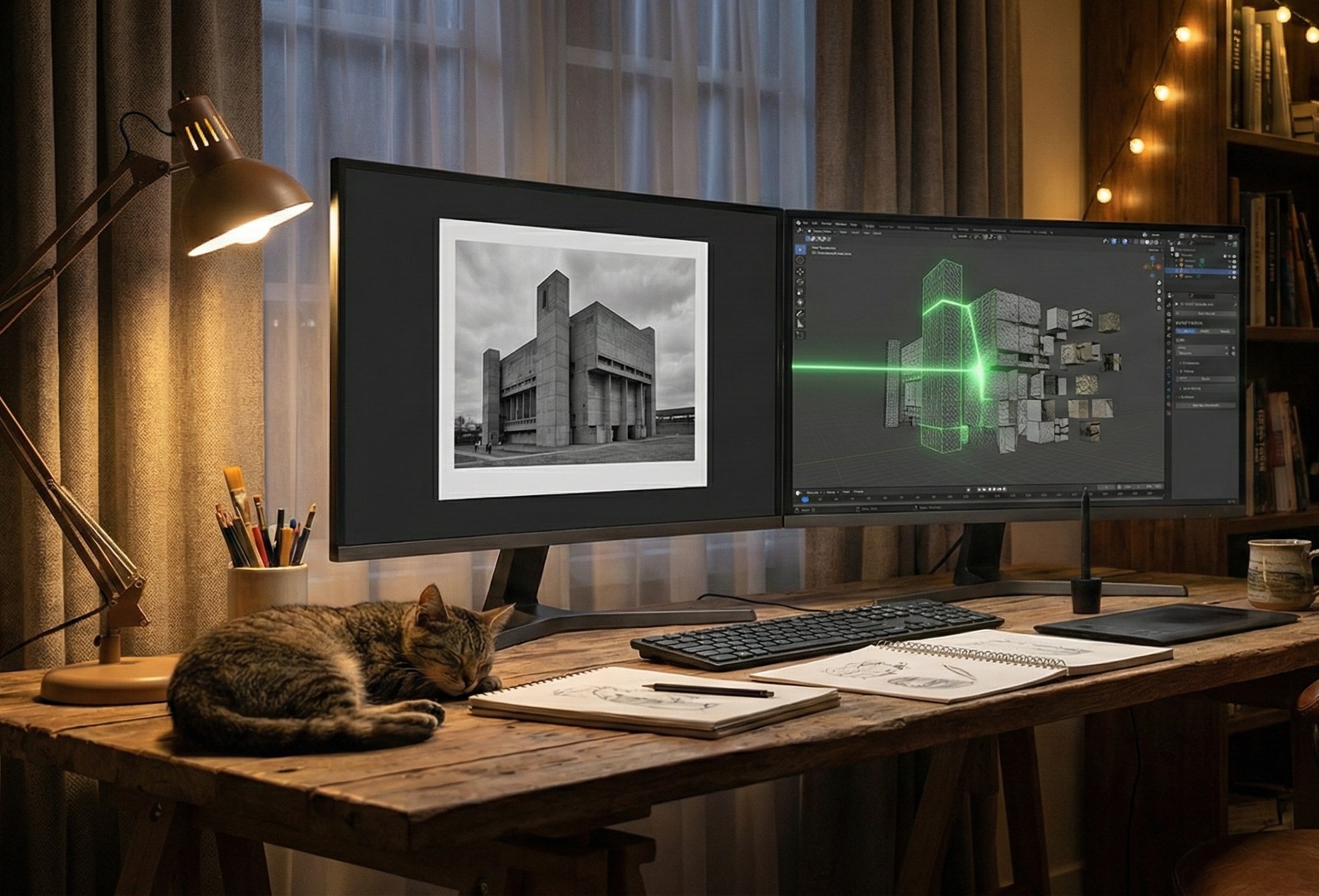
3D modeling: Create high-fidelity geometry for characters, props and environments using industry tools. Consider LOD (levels of detail) and modular asset systems for reuse and flexibility.
Texturing and materials: Produce PBR textures and material definitions, use atlasing and texture packing to reduce draw calls and memory. Master these details to keep visuals rich without crushing performance.
Rigging and animation: Animate characters or objects with skeletal rigs, blend trees, IK/FK systems and baked or procedural motion suitable to the platform. Make movement feel alive.
Audio design: Implement spatialized sound, reactive audio cues and voice/ambient layers that reinforce immersion. Sound is how people feel present.
Performance optimization: Mesh simplification, light baking, occlusion culling, GPU instancing, batching, and shader simplification tailored for target device processing and power constraints. Optimization isn't about cutting corners, it's about making your vision sing on every device.
File formats and pipelines: Export and validate assets in appropriate formats (glTF, FBX, USD, domain-specific packages), standardize naming and metadata for efficient import. Clean pipelines mean teams move faster.
Technical Integration
Engine implementation: Integrate assets into runtime engines (Unity, Unreal Engine, WebXR frameworks), optimizing scene graphs, physics, and rendering pipelines. Make it responsive and smooth.
Spatial mapping and anchoring: Implement environment understanding, surface detection, persistent anchors and alignment across sessions and devices. This is what makes XR feel grounded in reality.
Networking and synchronization: For multi-user XR, handle real-time networking, state reconciliation, latency compensation and authoritative servers or peer systems with elegance.
Data handling and analytics: Instrument sessions to gather telemetry on user behavior, performance metrics and system health for iterative improvement. Let data guide evolution.
Security and privacy: Protect user data, location info and session content; apply secure authentication/authorization for multi-user or enterprise deployments. Build trust through thoughtful protection.
Tools, Pipelines, and Automation
Asset management systems: Use version control and digital asset management to coordinate large teams and maintain history for 3D assets and scenes. Organize at scale without chaos.
Build automation: Continuous integration for asset validation, automated light/PBR baking, platform-specific builds and smoke tests. Let systems handle repetition so teams focus on creativity.
Procedural generation and parametric systems: For scalable worlds or configurable products, use procedural tools (Houdini, custom scripts) to generate content on demand. Build once, configure infinitely.
Interoperability and standards: Adopt or support open standards (USD, glTF), enabling reuse and portability across applications and platforms. Future-proof your work.
Testing and QA
Functional testing: Verify interactions, UI flows, input mapping and state transitions across devices. Make sure people can move through your world intuitively.
Performance and stress testing: Measure frame rates, memory use, thermal throttling and sustained power consumption; test under varied network conditions. Push for breaking points and fix them early.
Real-world field testing: Validate spatial tracking in target environments, lighting conditions and multi-user scenarios to catch edge cases. Test with real people in real spaces.
Accessibility and compliance testing: Ensure content meets accessibility guidelines and any regulatory requirements for enterprise or medical applications. Build for everyone.
Deployment, Distribution, and Maintenance
Packaging: Prepare app bundles, modular asset packs, or cloud-streamed content; optimize install sizes and streaming strategies for your audience.
Distribution channels: Plan delivery via app stores, enterprise deployment tools, web portals or cloud/edge streaming services. Choose what serves your users best.
Patch and update workflows: Hotfix strategies, backward compatibility of anchors/scenes and content versioning for persistent experiences. Good XR grows and evolves.
Monitoring and iteration: Use analytics to prioritize updates, understand how people move through your world and let data guide your next evolution.
Business and Production Considerations
Cost modeling: Estimate costs for asset creation, optimization, licensing, team resourcing and long-term maintenance. Build budgets that honor the vision and the work.